
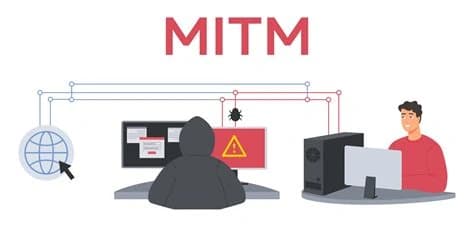
How Do Man-in-the-Middle Attacks Work?
-
Interception: The attacker first needs to intercept the communication between the two parties. This can be done in a number of ways, such as:
- ARP Spoofing: The attacker sends forged ARP messages to associate their MAC address with the IP address of a legitimate device, such as a router.
- DNS Spoofing: The attacker redirects a victim to a malicious website by forging DNS records.
- Wi-Fi Eavesdropping: The attacker sets up a malicious Wi-Fi hotspot and tricks victims into connecting to it.
-
Decryption: Once the attacker has intercepted the communication, they need to decrypt it to read the contents. If the communication is not encrypted, the attacker can simply read it in plain text. However, if the communication is encrypted, the attacker will need to use more sophisticated techniques to decrypt it, such as:
- SSL Stripping: The attacker forces a victim's browser to connect to a website over an unencrypted HTTP connection, even if the user typed in "https".
- SSL Hijacking: The attacker forges a digital certificate and tricks the victim's browser into accepting it as a legitimate certificate.
Types of Man-in-the-Middle Attacks
- Email Hijacking: The attacker intercepts emails and can read, modify, or delete them.
- Session Hijacking: The attacker steals a victim's session cookie and uses it to gain unauthorized access to their account.
- IP Spoofing: The attacker forges the source IP address of a packet to make it appear as if it is coming from a legitimate source.
- DNS Spoofing: The attacker forges DNS records to redirect a victim to a malicious website.
Real-World Impact
- Data Theft: The attacker can steal sensitive information, such as login credentials, credit card numbers, and personal information.
- Financial Loss: The attacker can use stolen information to make unauthorized purchases or transfer money.
- Malware Infection: The attacker can inject malware into the communication to infect the victim's device.
- Reputational Damage: A MitM attack can damage an organization's reputation and erode customer trust.
How to Protect Yourself from Man-in-the-Middle Attacks
- Use a Virtual Private Network (VPN): A VPN encrypts your traffic and makes it much more difficult for an attacker to intercept it.
- Use HTTPS: When you are browsing the web, make sure that you are using a secure HTTPS connection. You can tell if a website is using HTTPS by looking for a padlock icon in the address bar.
- Be Careful About Using Public Wi-Fi: Public Wi-Fi hotspots are often unsecured and can be a breeding ground for MitM attacks. If you must use public Wi-Fi, be sure to use a VPN.
- Keep Your Software Updated: Software updates often contain security patches that can protect you from known vulnerabilities.
- Use a Firewall: A firewall can help to block unauthorized access to your device.
What to Do If You Suspect a Man-in-the-Middle Attack
By being aware of the risks of MitM attacks and taking the necessary precautions, you can help to keep your data safe.