
How Do DoS and DDoS Attacks Work?
- SYN Flood: The attacker sends a rapid succession of SYN requests to a target's system in an attempt to consume enough server resources to make the system unresponsive to legitimate traffic.
- UDP Flood: The attacker sends a large number of User Datagram Protocol (UDP) packets to random ports on a remote host. This causes the host to repeatedly check for the application listening at that port, and when none is found, to reply with an ICMP Destination Unreachable packet. This process consumes host resources, which can ultimately lead to inaccessibility.
- HTTP Flood: The attacker sends a large number of HTTP requests to a web server, overwhelming it and preventing it from responding to legitimate requests.
- Amplification Attacks: The attacker uses a small number of machines to generate a large amount of traffic by exploiting vulnerabilities in public servers, such as DNS or NTP servers.
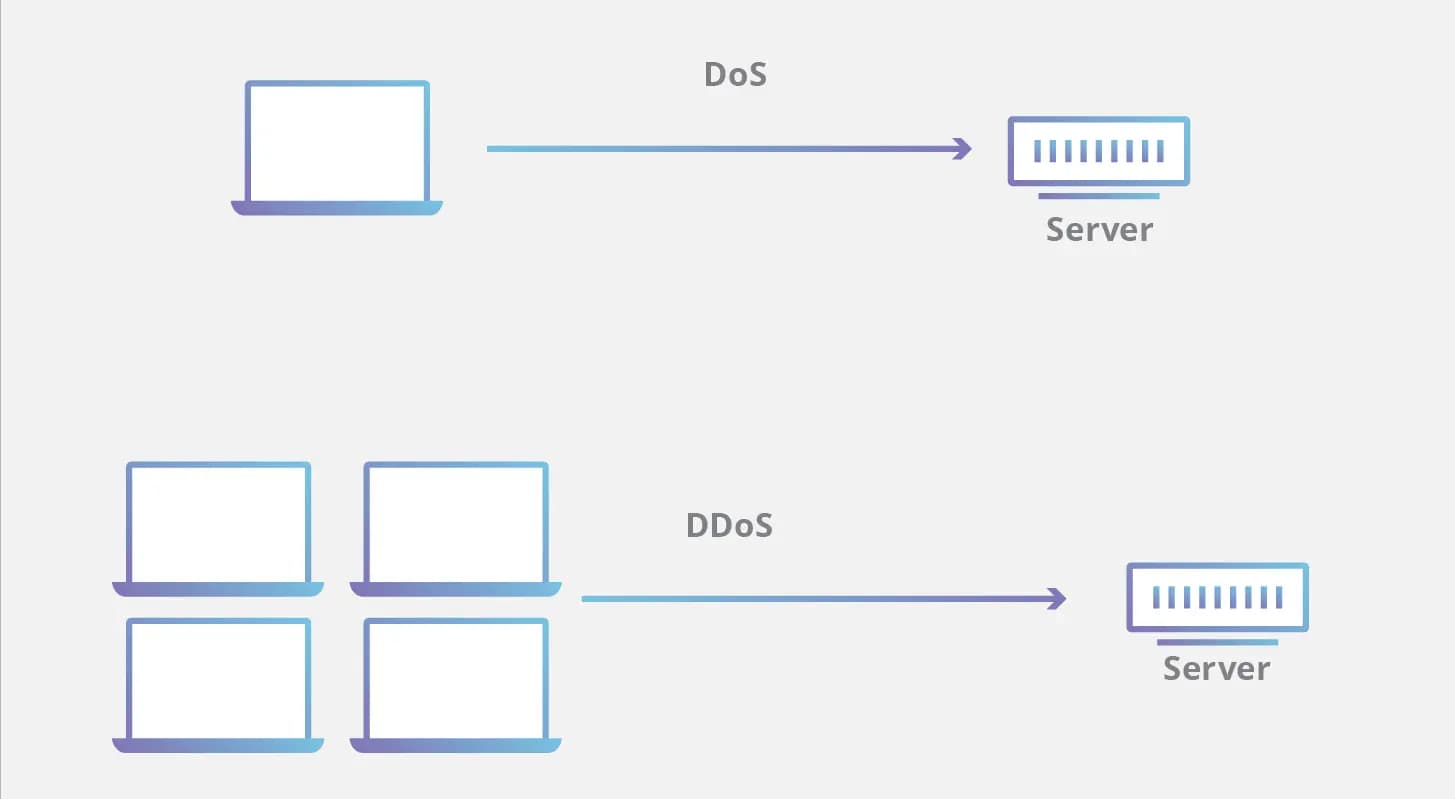
The Difference Between DoS and DDoS
Real-World Impact
- Service Unavailability: The most obvious impact of a DoS or DDoS attack is that the target service becomes unavailable to legitimate users.
- Financial Loss: For businesses, downtime can result in a significant loss of revenue.
- Reputational Damage: A successful DoS or DDoS attack can damage an organization's reputation and erode customer trust.
- Distraction for Other Attacks: Sometimes, a DDoS attack is used as a smokescreen to distract from other malicious activities, such as data theft or network intrusion.
How to Protect Against DoS and DDoS Attacks
- Traffic Filtering: Use a firewall or other traffic filtering solution to block malicious traffic before it reaches your network.
- Rate Limiting: Limit the number of requests that a single IP address can make to your server in a given period of time.
- Content Delivery Network (CDN): A CDN can help to absorb and mitigate the impact of a DDoS attack by distributing traffic across multiple servers.
- Cloud-based DDoS Protection Services: There are a number of cloud-based services that specialize in protecting against DDoS attacks.
- Have a Response Plan: Have a plan in place for how you will respond to a DoS or DDoS attack. This should include who to contact, how to mitigate the attack, and how to communicate with your customers.
What to Do If You Are Under Attack
By understanding the risks of DoS and DDoS attacks and taking the necessary precautions, you can help to ensure the availability of your online services.