
DHCP Starvation Attacks: How They Work and How to Stop Them
What is a DHCP Starvation Attack?
The Attack Mechanism
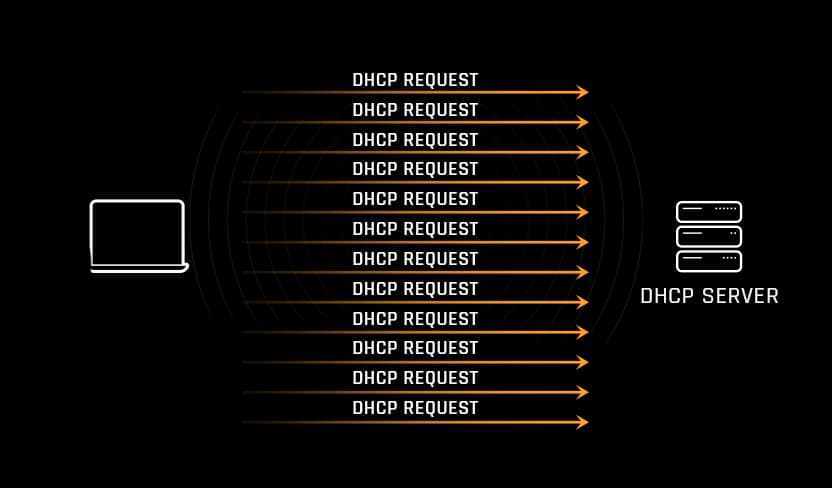
- Flooding Phase: The attacker sends hundreds of DHCP DISCOVER packets with spoofed MAC addresses.
- Exhaustion Phase: The DHCP server responds to each request, reserving IP addresses from its pool.
- Service Denial: With no addresses left, legitimate clients are denied service.
Real-World Impact
- Knock out network connectivity for legit users
- Cause router CPU to go to 100%
- Enable secondary attacks like credential harvesting
Prevention Strategies
- DHCP Snooping: A feature that differentiates between trusted and untrusted DHCP messages. It keeps a binding table of legit IP-MAC address pairs.
- Port Security: Limits the number of MAC addresses per switch port, prevents MAC address flooding.
- Rate Limiting: Limits the number of DHCP packets processed in a timeframe.
- IP Address Pool Management: Increasing the DHCP pool size makes exhaustion harder, but this isn't a complete solution.
- MAC Address Verification: Ensures the source MAC in frame headers matches the DHCP request.
Example: Implementing Protection on MikroTik
- Enable DHCP snooping features
- Configure trusted ports for legit DHCP servers
- Set MAC address limits per port
Key Terms
Regularly audit and monitor DHCP server logs for unusual activity also
recommended to detect early.